
Last updated September 22, 2026
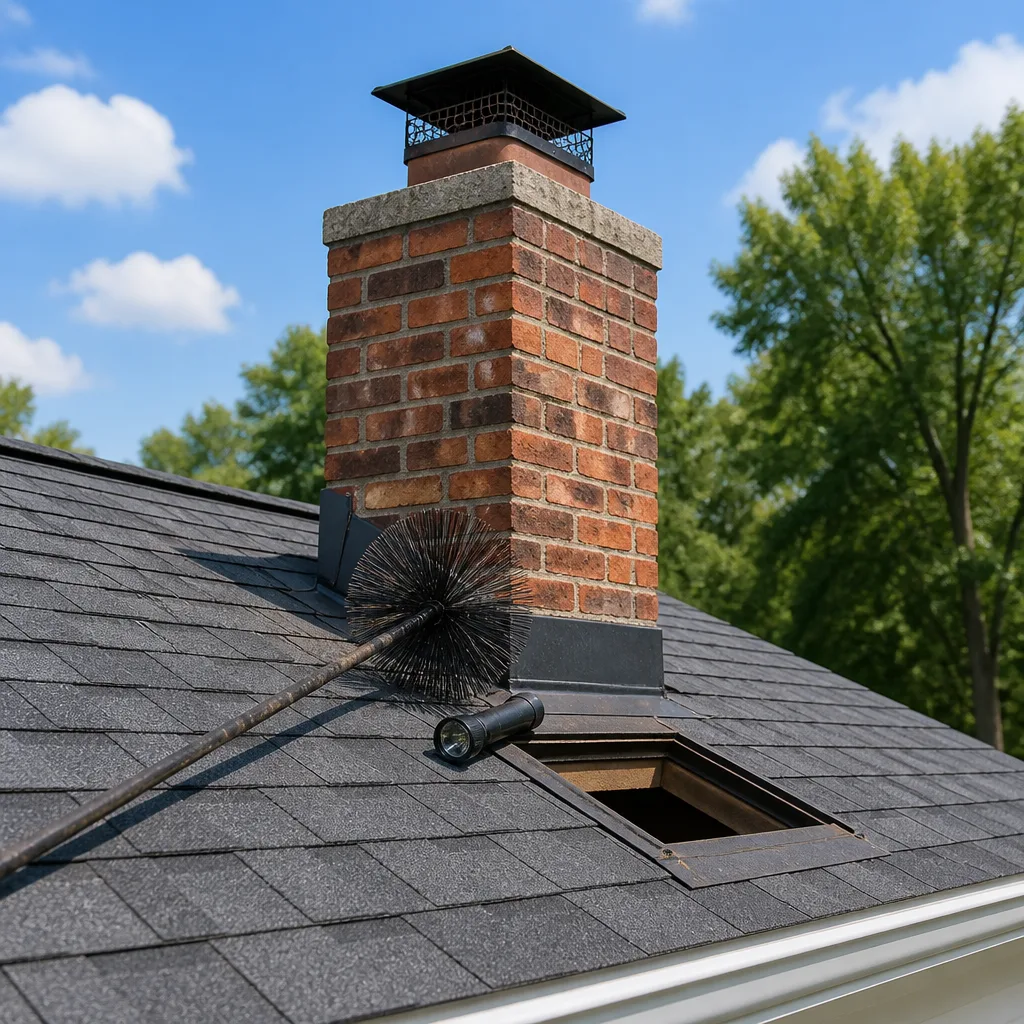
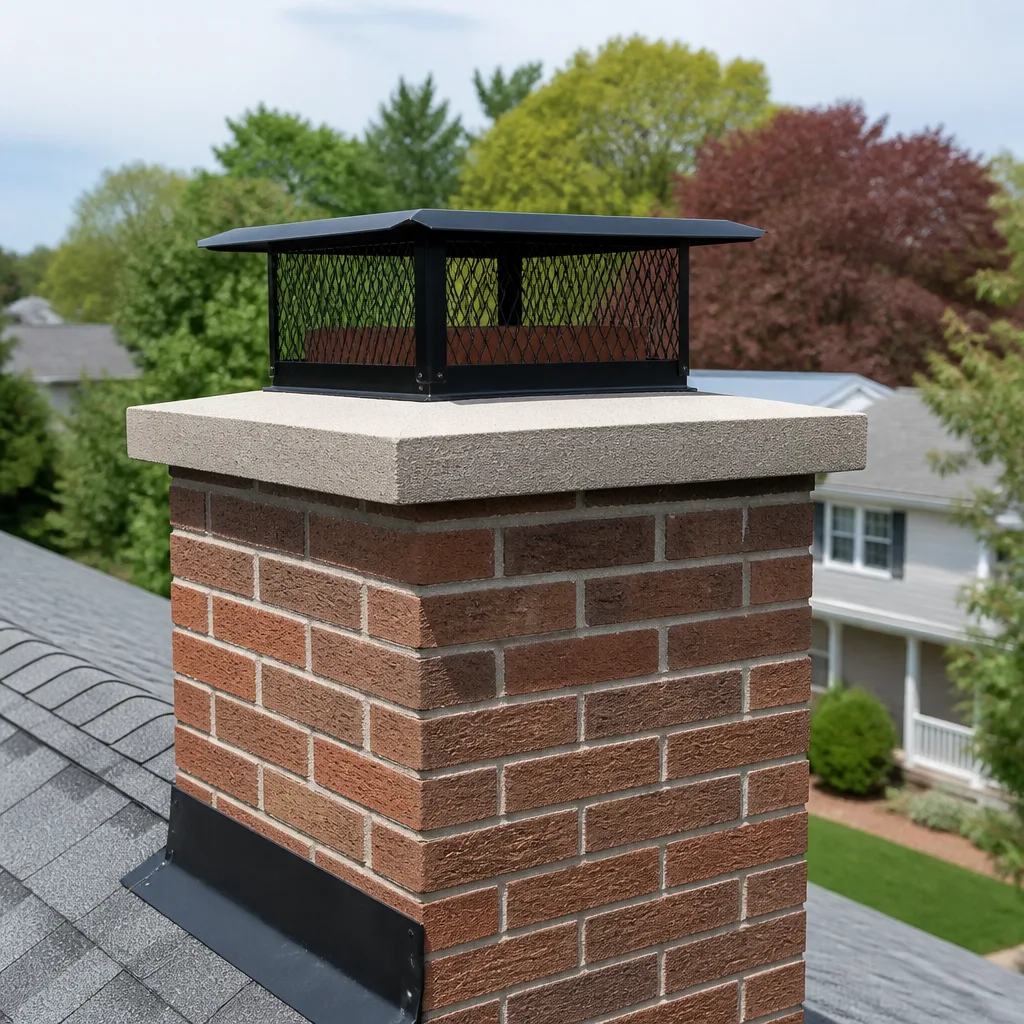
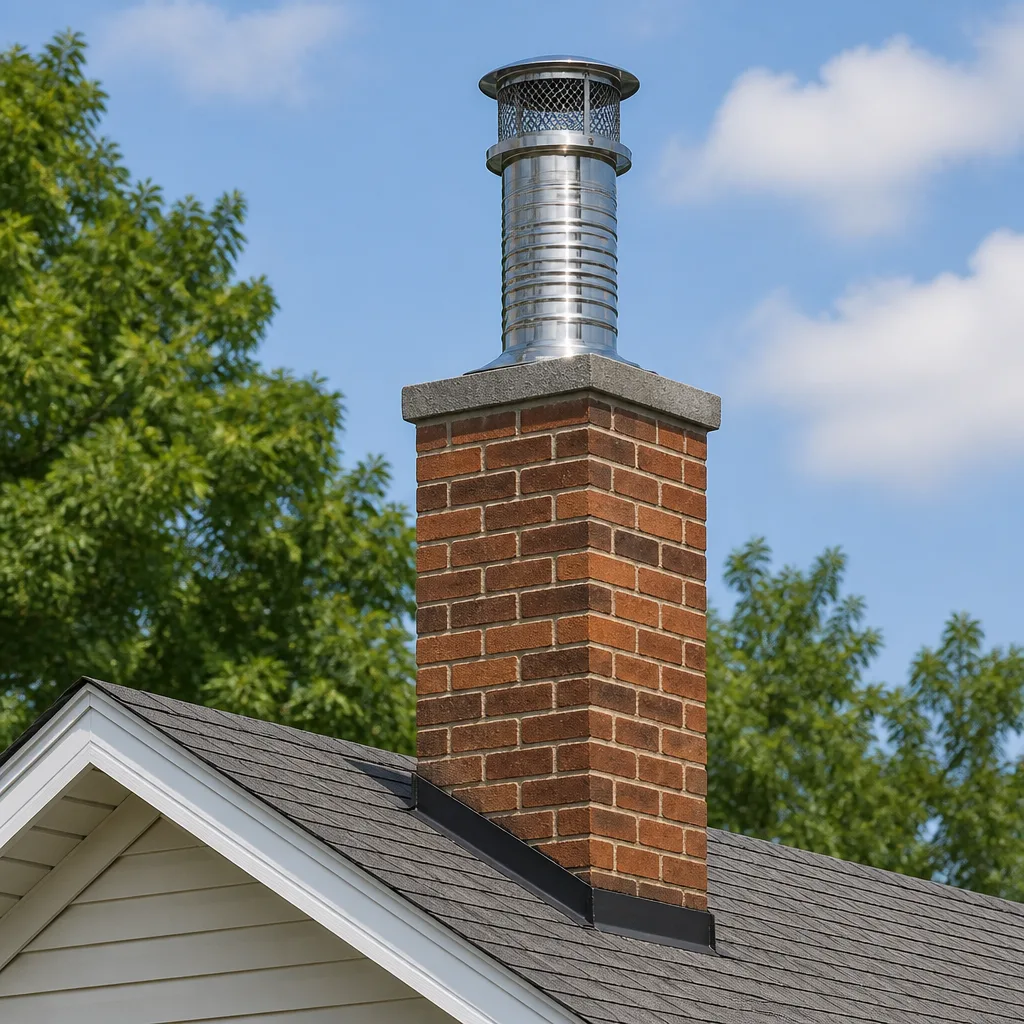
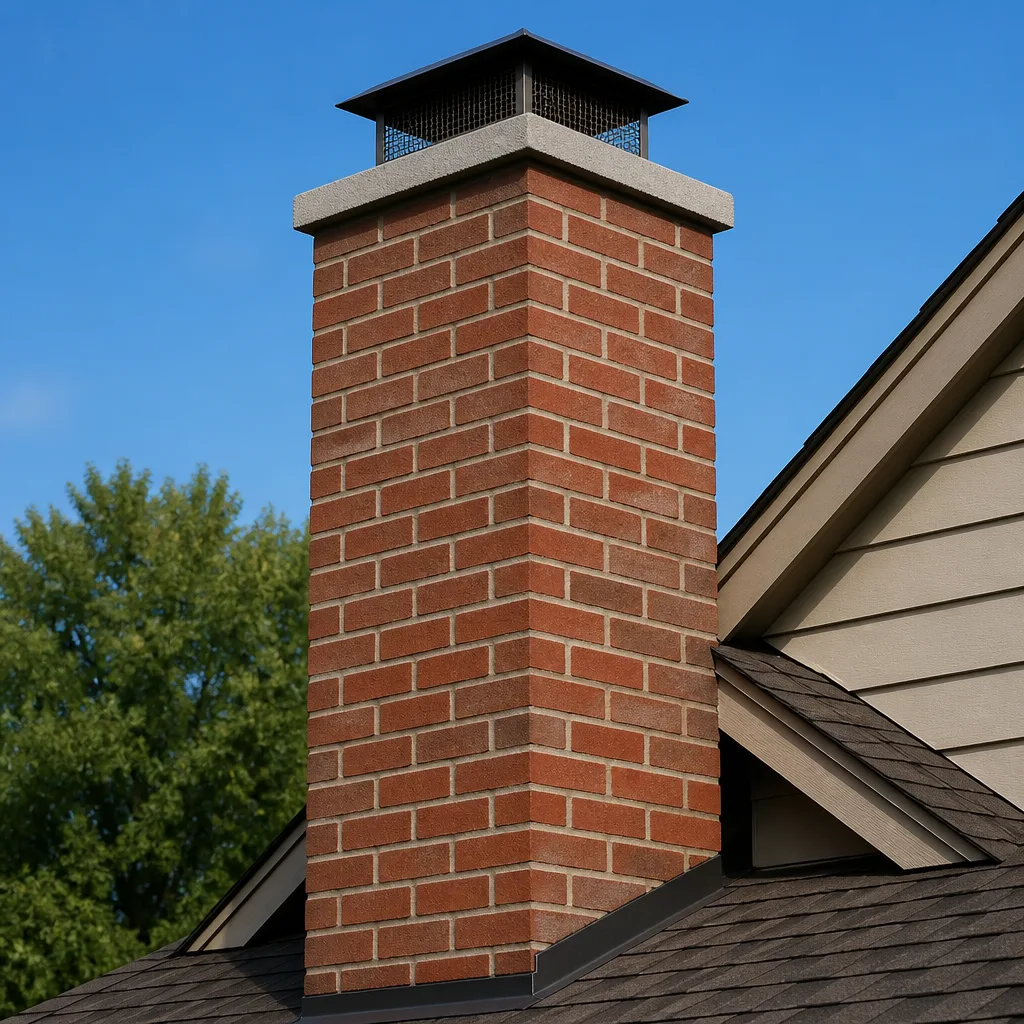
Level 1 sweep and inspection to the NFPA 211 annual standard - flue, crown, cap, and flashing checked and photographed
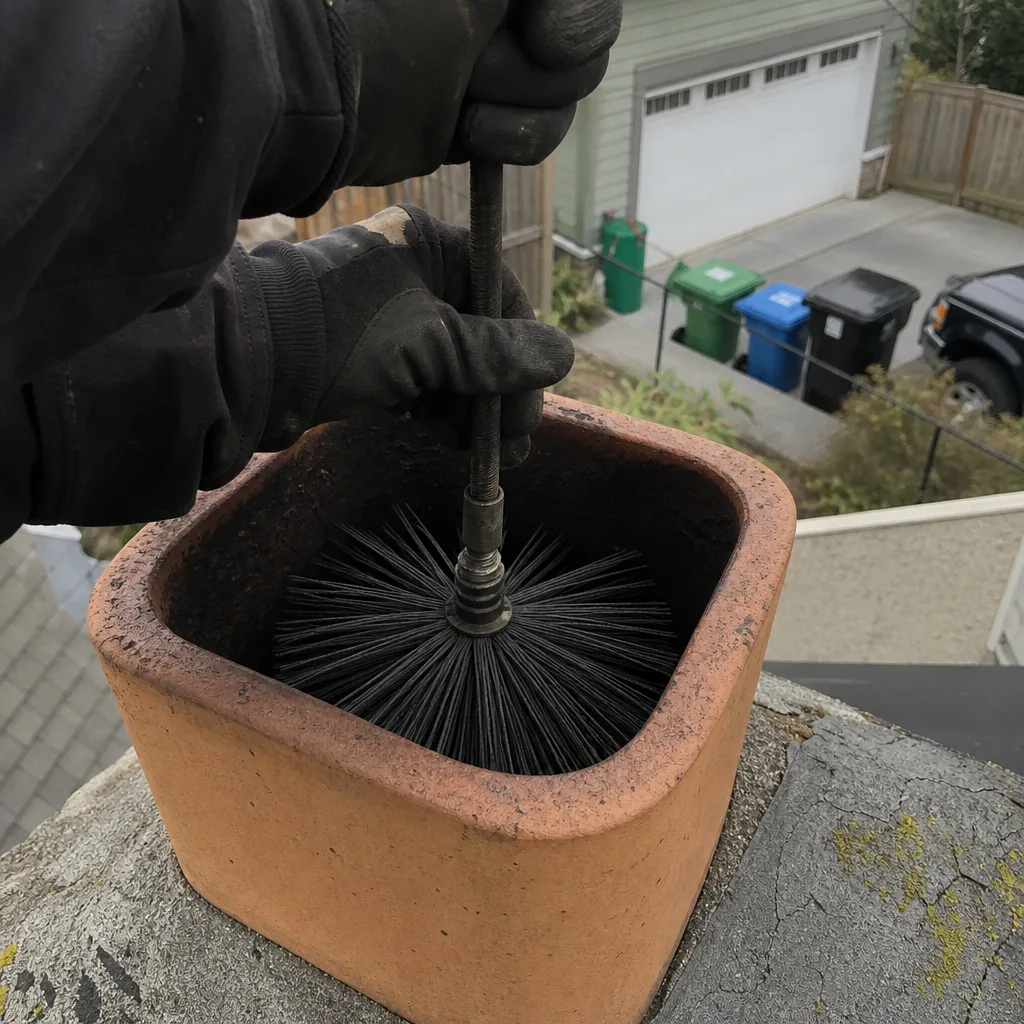
Chimney sweep logs do not sweep chimneys. They loosen some creosote - which then falls where a brush and vacuum still have to collect it.
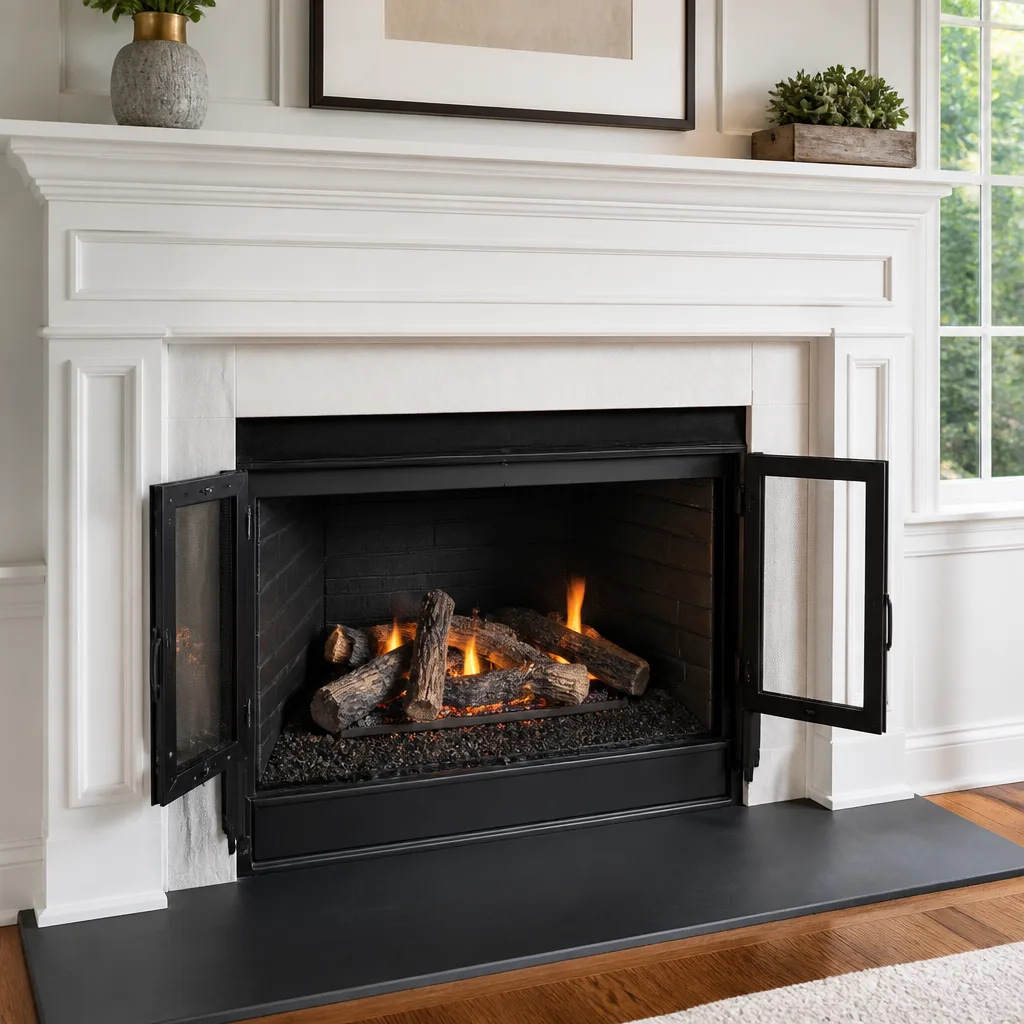
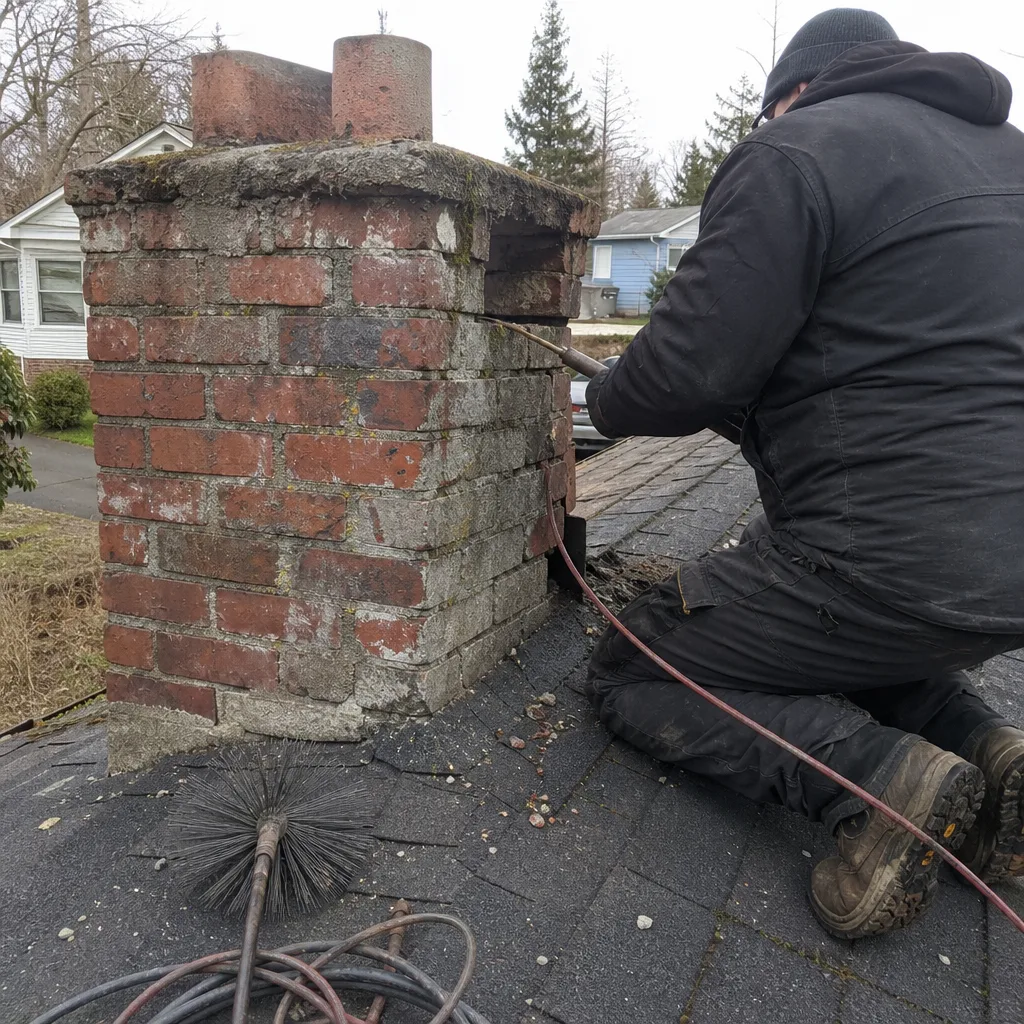 Before
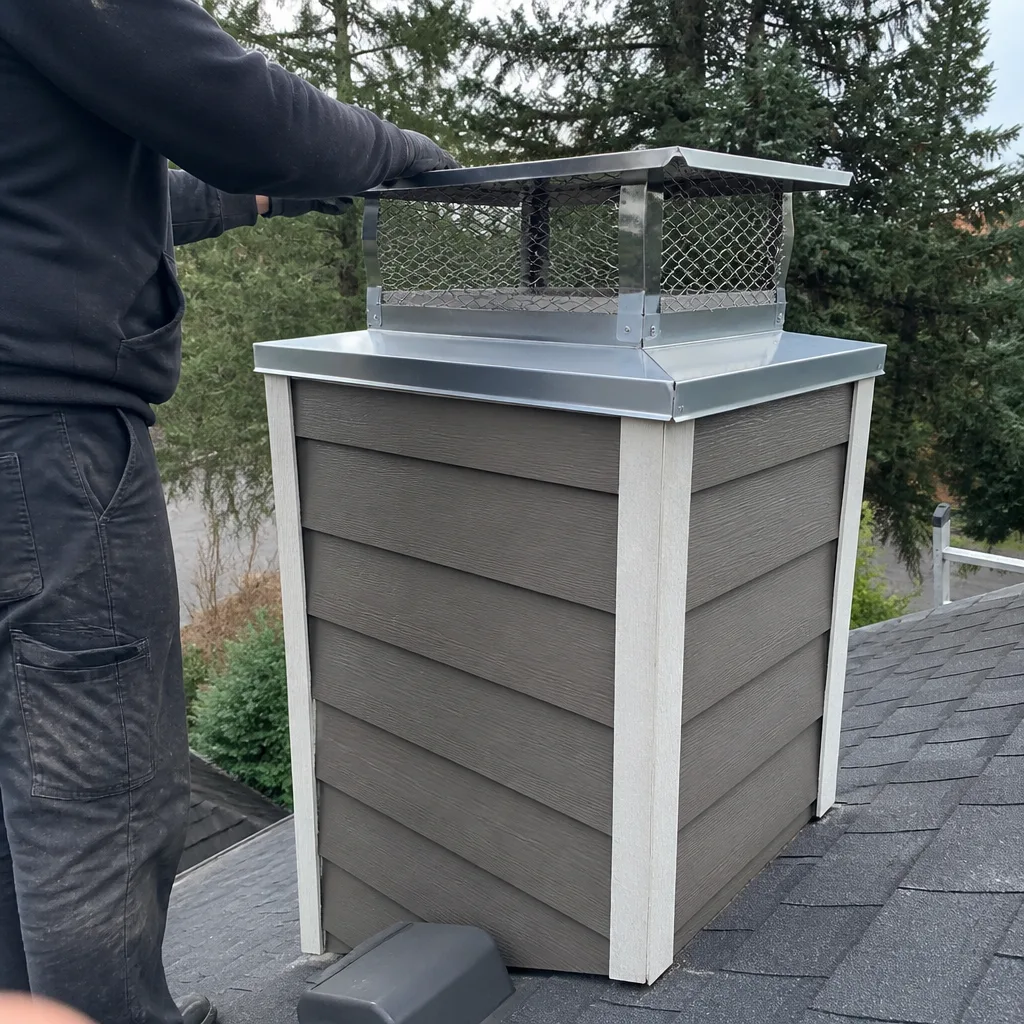 After
After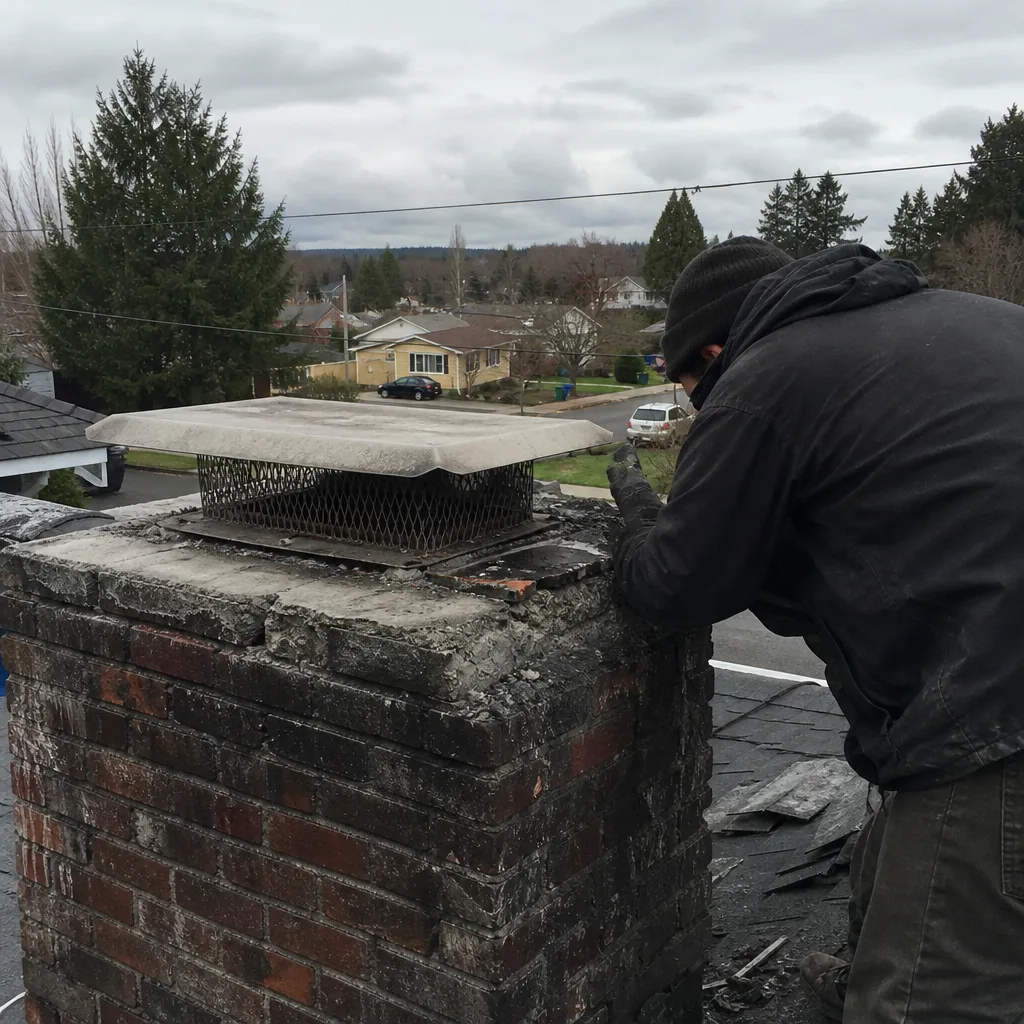 Before
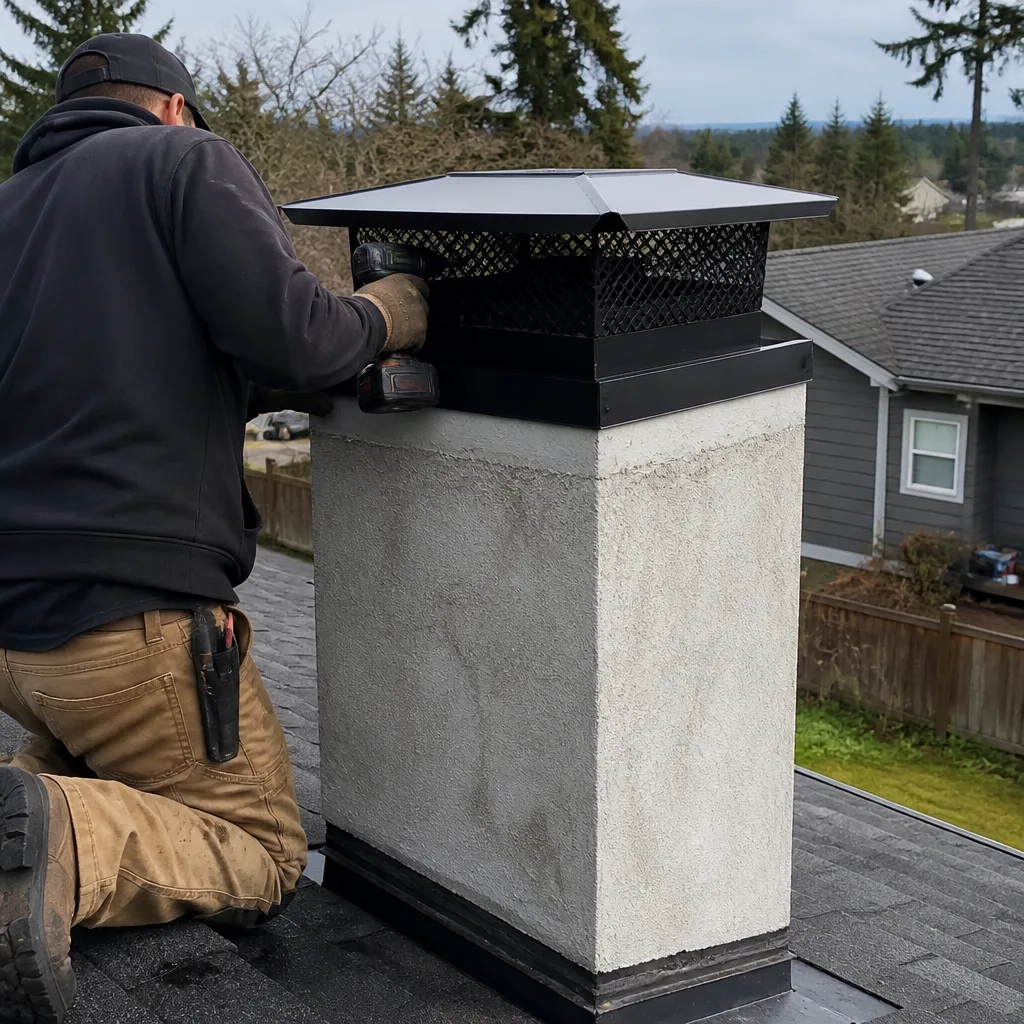 After
After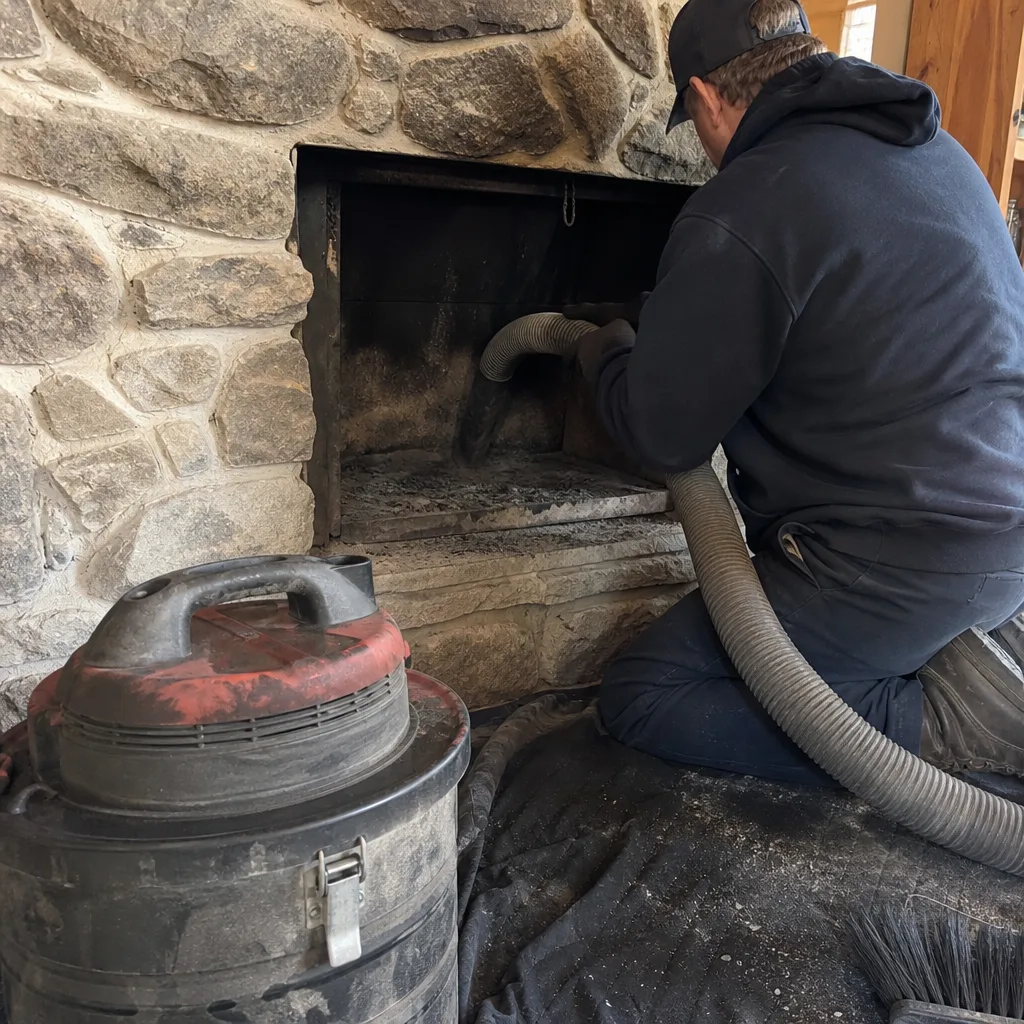 Before
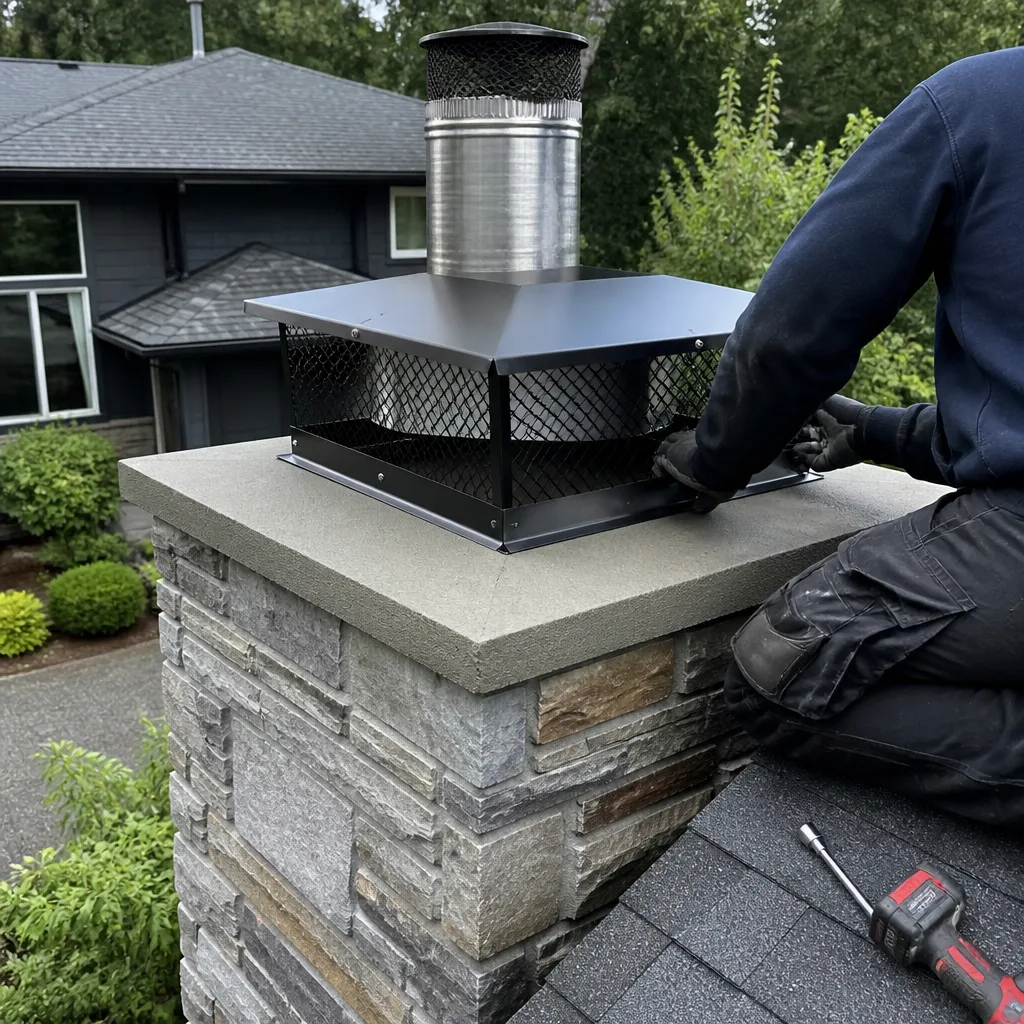 After
AfterSeasonal Chimney Cleaning Care for Tacoma: Year-Round Homeowner’s Guide
Every national guide says schedule your chimney cleaning in spring. In Tacoma, that advice leaves your chimney sitting through eight months of rain with last season’s creosote and no cap inspection before the next burn season opens in October. We’ve inspected more than 38,000 chimneys since 2009, and the pattern is consistent: homeowners who follow the national calendar pay more for preventable water damage and face longer wait times when they actually need service. This guide reorders the year around Tacoma’s real weather pattern - 180-plus rain days, mild shoulder seasons, and a burn season that starts fast when the first cold snap hits.
Quick Answer
In Tacoma, the highest-value chimney maintenance window is August through September, not spring. A Chimney Cleaning & Sweep in Tacoma completed before the rains arrive prevents water damage to untreated mortar, allows dry access for camera inspection of the flue liner, and avoids the October rush when sweep availability drops by 40 percent or more. Spring inspections are useful for documenting winter damage, but they are too late to prevent it.
Table of Contents
- Why August-September Is Tacoma’s Critical Preparation Window
- What the Wet Season Does to an Unprepared Chimney
- Spring Inspection Findings: Tacoma’s 180-Day Rain Toll
- Timing a Level 2 Inspection for Real Estate Transactions
- The One Winter Task Homeowners Can Handle
- How Timing Affects Your Annual Chimney Cost in Tacoma
- A Tacoma-Specific Year-Round Maintenance Calendar
- Common Mistakes to Avoid
- When to Call a Professional
- Frequently Asked Questions
 Before
 After
AfterWhy August-September Is Tacoma’s Critical Preparation Window
Tacoma’s maritime climate creates a narrow, predictable service window that most homeowners miss. By mid-August, the summer dry spell has pulled moisture out of masonry surfaces. By late September, the first sustained rains return. That six-to-eight-week gap is when your chimney is most accessible, most inspectable, and most in need of attention before the weather turns.
Here’s why this timing matters in practical terms:
- Dry flue conditions allow accurate camera inspection. NFPA 211 Level 2 inspection requires a visual scan of the flue liner interior. Moisture in the flue from recent rain can obscure cracks, spalling, or deteriorated mortar joints between liner sections. In August and September, we routinely capture clearer imagery in Tacoma chimneys than at any other time of year.
- Mortar and crown sealants cure properly. Any crown repair, tuckpointing, or waterproofing application needs 48 to 72 hours of dry weather to set. Tacoma’s October through May forecast makes this unreliable. We’ve had to reschedule crown pours in October because a forecast changed - and that delay pushed the job into burn season.
- Technician availability is highest. Our schedule in August and September typically has same-week openings. By mid-October, that stretches to two or three weeks. The difference isn’t marketing; it’s math. Tacoma has a finite number of certified sweeps and a concentrated demand spike.
- Pre-winter pricing is stable. Emergency calls in November - water intrusion discovered during the first fire, or a blocked flue triggering a smoke backup - carry premium rates and limited options. Scheduled maintenance in August avoids both.
In the North End and Proctor neighborhoods, where we see a concentration of 1920s masonry chimneys, August crown inspections are particularly valuable. The original poured-concrete crowns on these homes are often 80 to 100 years old. Catching crown deterioration before the rains means a repair that costs $400 to $800. Missing it means water infiltration that requires partial rebuilds running $2,500 and up.
We’ve also found that homeowners in newer developments like Point Ruston or the Tacoma Dome district sometimes assume their chimneys need less attention. The reality is that factory-built metal chimneys - common in homes built 1995 to 2010 - have chase covers that rust through in Tacoma’s climate in 12 to 15 years if not galvanized or stainless. August is when we document this deterioration most clearly, before rust staining on the siding becomes the first visible warning.
What the Wet Season Does to an Unprepared Chimney
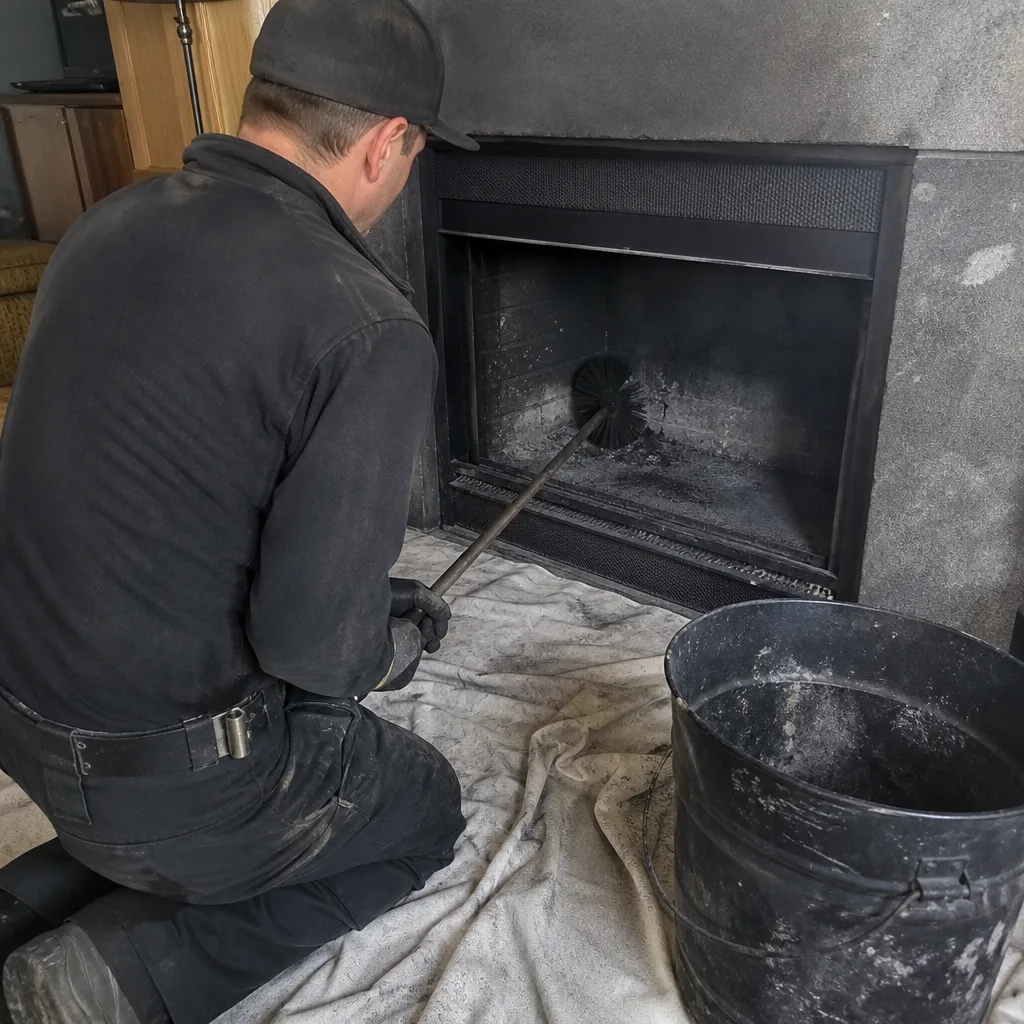
Tacoma’s wet season isn’t just rain. It’s sustained moisture, temperature cycling near freezing, and wind-driven water that finds every unsealed surface. From October through March, we document damage that was preventable with proper August-September preparation.
The mechanism is straightforward. Brick and mortar are porous. When water enters and temperatures drop below 32°F, expansion creates pressure. The cycle repeats dozens of times each winter. The result is spalling - the face of the brick popping off - and mortar joint erosion that accelerates with each season.
Here’s what we measure on Chimney Repair in Tacoma calls during and after the wet season:
| Component | Condition if Unprepared | Typical Timeline | Cost Range to Remediate |
|---|---|---|---|
| Crown (poured concrete) | Cracking, water intrusion to flue | 2-4 winters | $400 - $1,200 |
| Chase cover (factory-built chimney) | Rust holes, water into chase | 10-15 years | $350 - $900 |
| Brick face (spalling) | Surface loss, structural weakening | 3-5 winters | $1,500 - $4,500 |
| Flue liner (clay tile) | Crack expansion from freeze-thaw | Variable | $2,800 - $5,500 |
| Smoke chamber | Parging deterioration | 5-10 years | $800 - $2,000 |
These are documented ranges from our 38,000-plus jobs, not national estimates. The variation reflects chimney height, access difficulty, and whether the repair requires scaffold or ladder work.
One pattern specific to Tacoma’s hillside neighborhoods - Stadium District, North Slope, parts of West End - is wind-driven rain penetration through deteriorated flashing. Homes with chimneys on the windward side of a slope see accelerated flashing corrosion. We inspect this with the camera and document it with photos, but the ideal time to reflash is before the wet season starts, not after leaks appear in the attic or on the ceiling.
Carbon monoxide risk also rises in wet-season chimneys with compromised liners. A cracked flue liner can allow exhaust gases to enter the home through gaps in the masonry. In Tacoma’s tightly sealed modern homes, negative pressure from exhaust fans can pull these gases into living spaces. We don’t raise this to alarm anyone. We raise it because a camera inspection in August finds the crack; a CO detector in November finds the symptom.
Spring Inspection Findings: Tacoma’s 180-Day Rain Toll
Spring chimney inspections in Tacoma tell a specific story. By April, we’ve had six months of rain, occasional snow, and multiple freeze-thaw cycles. The chimney has been wet more often than dry. What we find in April is different from what we find in August - and the difference is instructive.
Crown damage is advanced, not incipient. Hairline cracks from August have widened. Water that entered through those cracks has saturated the crown’s interior concrete, and in cold snaps, that water has expanded. By April, we’re often recommending crown replacement rather than crown repair. The cost difference is typically $400 versus $800 to $1,200.
Chase cover rust is visible from the ground. What was surface discoloration in September is now pinhole penetration. Water has entered the chase and saturated the insulation around the metal flue. In factory-built chimneys, this is the most common spring finding we document. Replacement with a stainless chase cover - we source through our Haven buying network from Gelco or Copperfield - prevents the next stage: rust-through of the flue pipe itself.
Brick spalling is active. The freeze-thaw cycle has done its work. We photograph spalled faces and measure mortar joint depth. Joints eroded beyond half an inch need repointing. In the Hilltop and McKinley neighborhoods, where many homes have original 1940s brickwork, we see this pattern consistently. The brick is salvageable if caught early. Left another season, water penetrates to the wythe - the inner layer - and repair costs multiply.
Flue liner cracks have propagated. Thermal shock from first fires in October, combined with moisture infiltration, causes clay tile liners to crack at the corners. By spring, those cracks have often extended the full tile length. A stainless steel liner from DuraFlex, properly sized and installed, restores the chimney to code-compliant condition. We document the before condition with camera footage and provide the after documentation under Haven Standard Clause 4.
Spring inspections are not worthless. They’re diagnostic. They tell you what the winter cost you. But they don’t prevent the cost. For that, you need the August-September window.
Timing a Level 2 Inspection for Real Estate Transactions
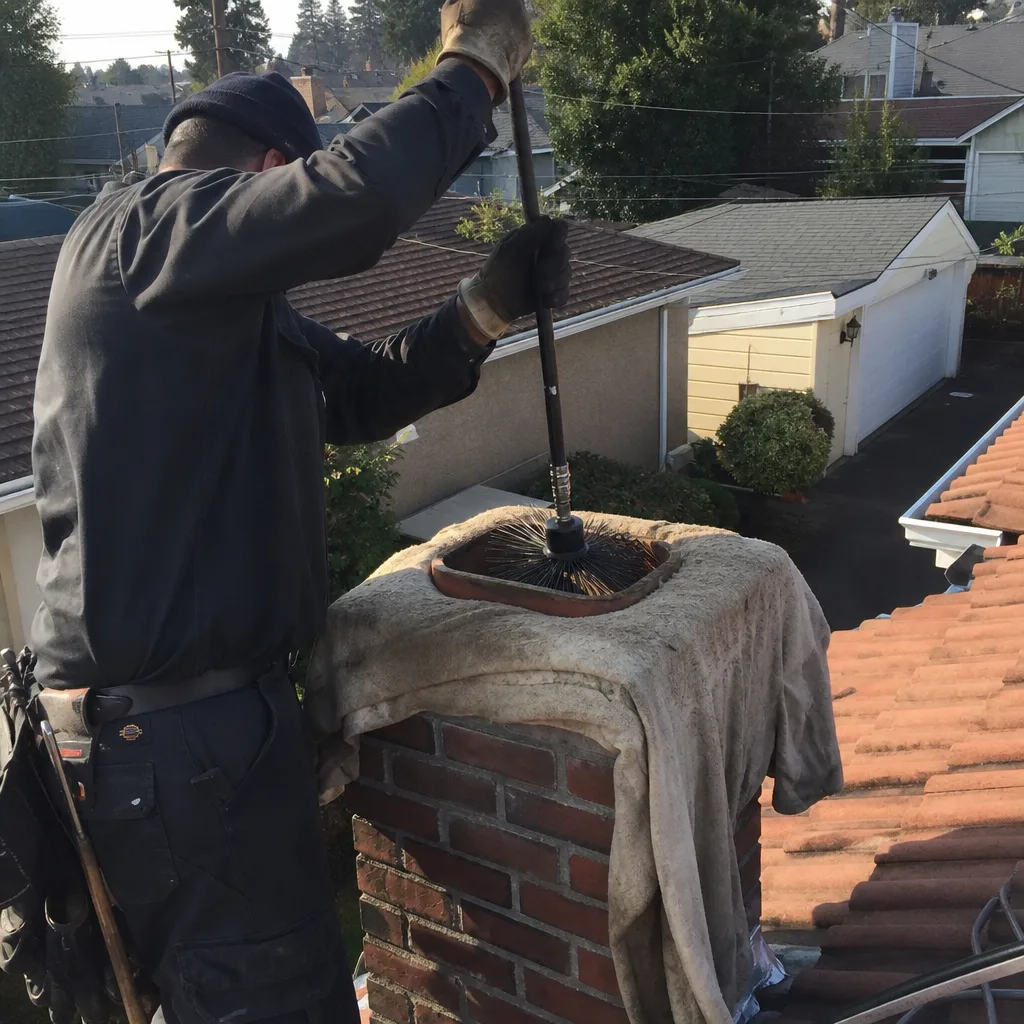
Tacoma’s real estate market clusters in predictable seasons. Listings peak in April, May, and June. Buyers making offers in that window need inspection contingencies resolved quickly. A chimney is often the last system checked, and the findings can delay closing or renegotiate price.
We’ve completed thousands of Level 2 inspections for real estate transactions in Tacoma. The pattern is consistent: sellers who scheduled their inspection in March or early April had time to address findings. Sellers who waited until their buyer’s inspector found problems in May faced compressed timelines and less negotiating position.
A Level 2 inspection for real estate includes:
- Interior and exterior visual examination of the chimney structure
- Camera scan of the flue liner from firebox to crown
- Inspection of the smoke chamber, damper, and firebox
- Documentation of clearance to combustibles where accessible
- Written report with photo record, delivered within 24 hours
The photo record is particularly important in real estate contexts. Buyers in Tacoma’s competitive market - where median home prices in North End and Proctor have exceeded $600,000 - want documentation, not verbal assurance. Clause 4 of the Haven Standard requires this photo record on every job, and we’ve delivered it since 2009.
For sellers, we recommend scheduling the Level 2 inspection in March, before listing. This allows time for any repair - Fireplace Services in Tacoma, liner replacement, or crown work - to be completed and documented before the first showing. For buyers, we recommend reviewing the seller’s inspection report, then calling us for a Free Second Opinion on any written estimate if work is recommended. This is standard practice under the Haven Standard.
One Tacoma-specific note: homes in the historic districts - Stadium-Seminary, North Slope, Old Town - often have unlined brick chimneys or early clay tile liners that predate modern codes. Insurance companies increasingly require documentation of liner condition for these properties. A Level 2 inspection with camera footage satisfies this requirement and prevents last-minute coverage issues.
The One Winter Task Homeowners Can Handle
We don’t recommend DIY chimney maintenance. The flue is inaccessible without proper equipment, and roof work on wet Tacoma surfaces is genuinely dangerous. But there is one winter task that homeowners can perform safely, and it produces useful documentation if done correctly.
Monthly firebox inspection for ice-related spalling.
The firebox - the brick or refractory panel enclosure where the fire burns - is visible without tools. After a cold snap, particularly when temperatures have dropped below freezing with precipitation, open the damper and shine a flashlight on the firebox walls and floor. Look for:
- Surface flaking or popping on brick faces (spalling)
- New cracks in refractory panels, particularly at corners
- White powdery deposits (efflorescence) indicating moisture migration
- Loose or missing mortar between firebox bricks
The documentation method: photograph any finding with your phone, including a reference object for scale (a coin, a key). Email the photo to yourself with the date and outdoor temperature. This creates a timestamped record that we can compare to our camera inspection when you schedule service.
What this tells us: spalling in the firebox often indicates water intrusion from above - a cracked crown, failed flashing, or deteriorated chimney cap. Catching it in January rather than April means we can schedule repair in the March dry window, before the spring rains intensify.
What not to do: don’t attempt to repair firebox cracks with refractory cement yourself. The wrong product or improper cure conditions can accelerate damage. Don’t clean the flue from below with household tools - you won’t reach the upper third where most creosote accumulates, and you’ll compact what you do reach. And don’t climb on the roof in winter conditions. We’ve responded to emergency calls where a homeowner fell inspecting their own chimney. It’s not worth it.
How Timing Affects Your Annual Chimney Cost in Tacoma
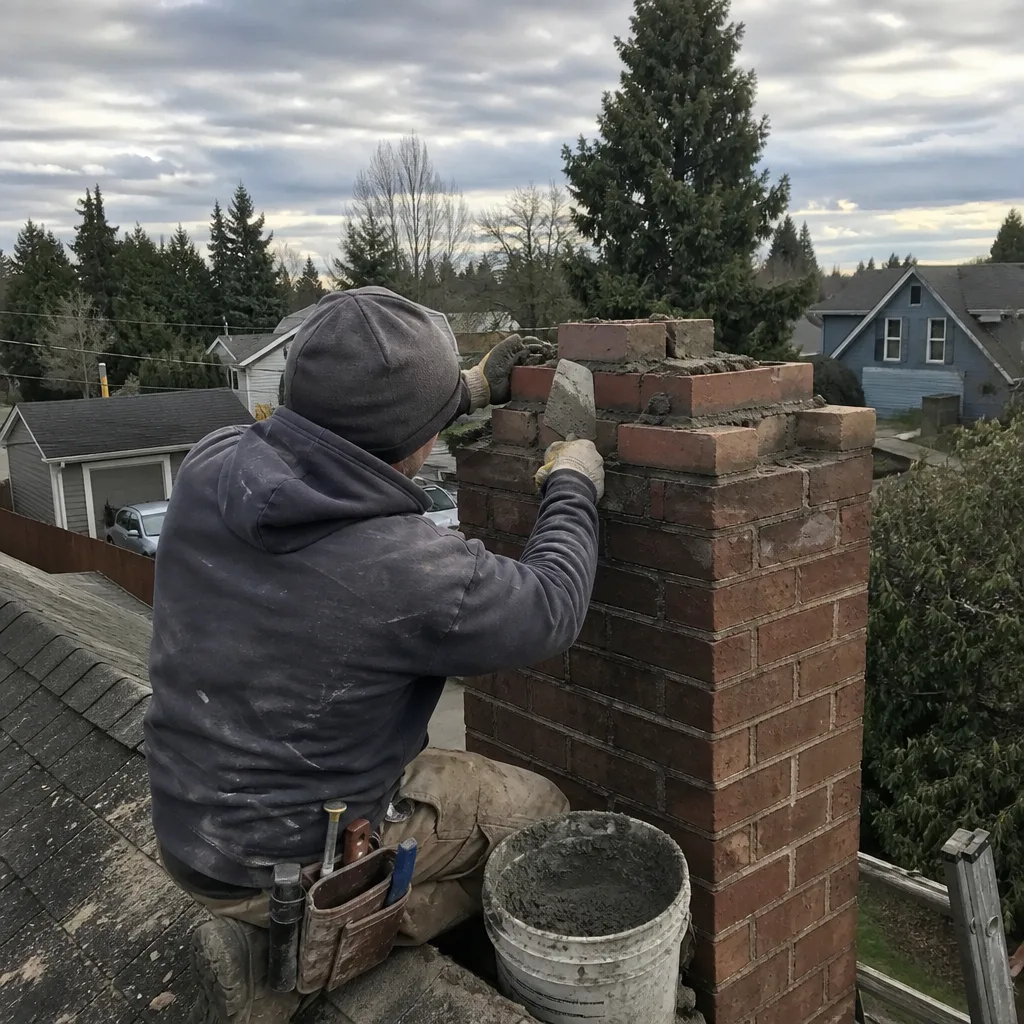
The cost of chimney maintenance in Tacoma varies less by company than by timing. A homeowner who follows the inverted calendar we recommend - August-September preparation, spring diagnostic inspection - spends less over a five-year period than one who follows the national spring-cleaning advice.
Here’s the comparison based on our documented pricing:
| Service | Scheduled (Aug-Sep) | Emergency (Oct-Nov) | Deferred (Spring Discovery) |
|---|---|---|---|
| Chimney sweep + Level 2 inspection | $285 - $350 | $350 - $425 | $285 - $350 (plus repair costs) |
| Crown repair (minor) | $400 - $650 | $500 - $800 | $800 - $1,200 (replacement) |
| Chase cover replacement | $350 - $700 | $450 - $900 | $700 - $1,100 (with flue damage) |
| Stainless liner installation | $2,800 - $4,500 | $3,200 - $5,000 | $3,500 - $5,500 (with masonry repair) |
The emergency premium reflects after-hours scheduling, compressed timelines, and the fact that many homeowners call multiple companies when they’re cold and smoke is backing up. The deferred cost reflects damage progression - what was repairable becomes replaceable.
Our pricing is always delivered in writing before work starts, under Haven Standard Clause 1. We don’t adjust after arrival. The price you approve is the price you pay. Materials for liner and repair work come through our Haven buying network from DuraFlex, HeatShield, Gelco, Olympia Chimney, Famco, and Copperfield - sourced specifically to keep customer prices honest, not to maximize margin.
For budgeting purposes, we tell Tacoma homeowners to plan $300 to $400 annually for sweep and inspection, plus $500 to $1,500 every three to five years for preventive repair. Defer everything and the five-year cost typically runs $4,000 to $8,000 when a liner fails or structural damage requires rebuild.
A Tacoma-Specific Year-Round Maintenance Calendar
This calendar inverts the national guidance and aligns with Tacoma’s actual conditions. Use it as a framework, adjusting for your specific chimney type, fuel, and burn frequency.
August-September: Primary Service Window
- Schedule chimney sweep and NFPA 211 Level 2 inspection
- Review camera footage and written report with technician
- Approve any recommended repair; schedule before October rains
- Verify chimney cap or crown condition; replace or seal as needed
- Test damper operation; lubricate if sticking
October: Pre-Burn Verification
- Confirm all approved repairs are complete and documented
- Stock appropriate fuel (seasoned hardwood, minimum 6 months dried)
- Test smoke and CO detectors; replace batteries
- First fire: small, hot, with damper fully open; observe draft behavior
November-February: Active Burning Season
- Monthly firebox visual inspection (see section above)
- Burn only seasoned wood; avoid pine and unseasoned cuttings
- Monitor for smoke backup, unusual odors, or draft reversal
- Call immediately for suspected blockage or CO symptoms
March: Post-Season Diagnostic
- Schedule Level 2 inspection to document winter condition
- Photograph any visible exterior damage before spring growth obscures it
- Review findings; prioritize repairs for August-September scheduling
April-May: Real Estate Preparation (if applicable)
- Sellers: complete Level 2 inspection and any repair before listing
- Buyers: review seller’s documentation; request second opinion if needed
- Document all work for insurance and warranty transfer
June-July: Planning and Budgeting
- Review inspection reports from prior 12 months
- Request written estimate for fall work; lock pricing if offered
- Schedule August-September appointment before availability tightens
This calendar assumes wood-burning use 2 to 4 times weekly during burn season. Gas fireplace users should still schedule annual inspection - the venting system, not the flue, is the critical component - but the urgency around creosote accumulation is lower. Pellet stove users need more frequent cleaning (every 1 to 2 tons burned) due to ash and fly particulate accumulation.
Common Mistakes to Avoid
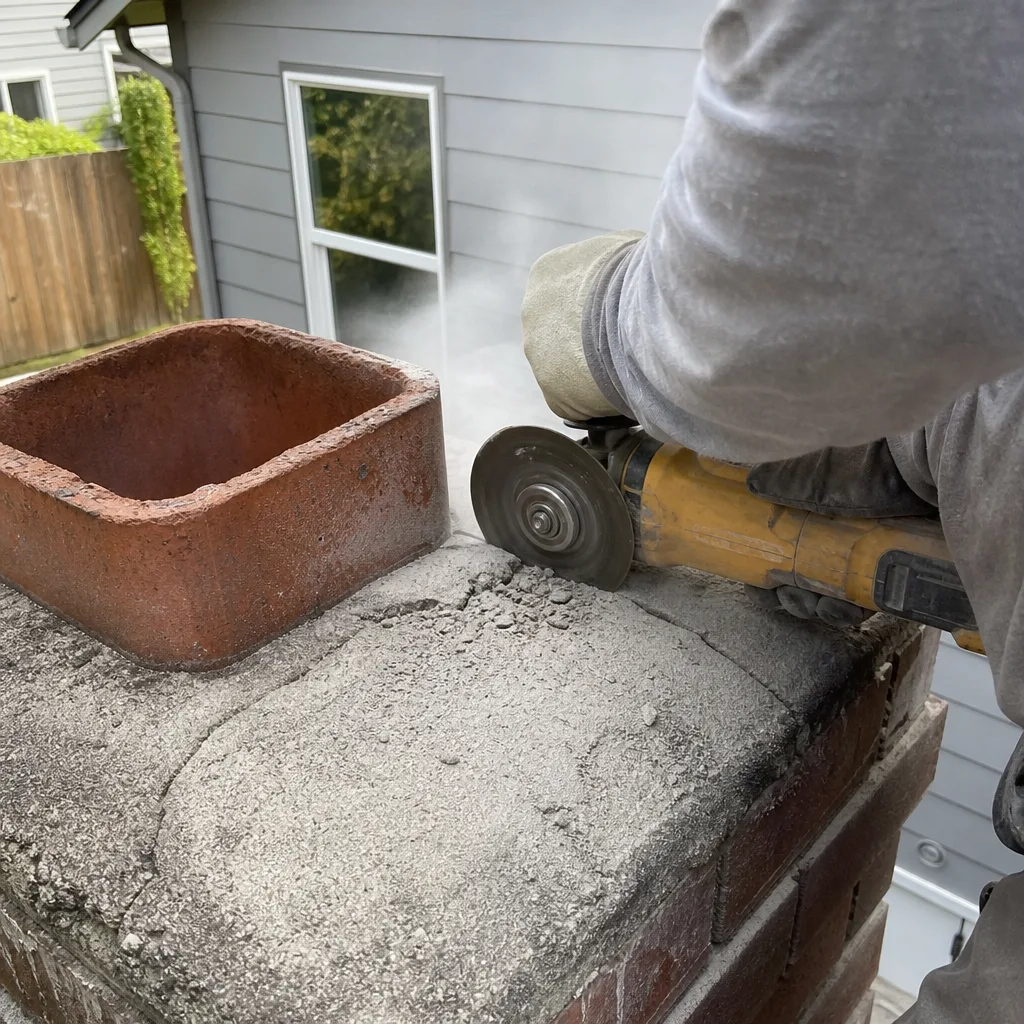
- Waiting for “spring cleaning” to schedule your sweep. By April in Tacoma, your chimney has endured six months of rain with last season’s creosote still present. The acids in creosote accelerate mortar deterioration when combined with moisture. Spring cleaning is too late to prevent winter damage.
- Assuming a gas fireplace needs no inspection. Gas vents can deteriorate, become blocked by nests or debris, or be improperly sized for the appliance. Carbon monoxide risk from a failed gas vent is immediate and lethal. Annual inspection is non-negotiable.
- Ignoring the chimney cap. A missing or damaged cap is the single most common entry point for water and animals. In Tacoma’s dense tree canopy - particularly in North End, Proctor, and West End neighborhoods - squirrel and raccoon intrusion is routine. A stainless cap from Gelco or Copperfield, properly sized and installed, prevents both.
- Accepting a “flashlight inspection” as sufficient. NFPA 211 defines three levels of inspection. Level 1 is visual, from accessible areas, with no tools. Level 2 requires camera scan of the flue interior. In Tacoma’s older housing stock, a Level 1 inspection misses the conditions that matter most. We made Level 2 the default in 2009 for exactly this reason.
- Burning unseasoned or improper wood. Fresh-cut Douglas fir, common in Tacoma’s tree-removal cycle, contains 50 to 60 percent moisture. It produces cool, smoky fires that deposit Class III glazed creosote - the most combustible form and the hardest to remove. Season hardwood for minimum 12 months, or purchase kiln-dried firewood.
- Deferring repair based on “it still works.” A chimney that drafts poorly or leaks slightly still functions until it doesn’t. The failure mode is often sudden: a blocked flue on the coldest night, a CO alarm at 2 a.m., or a crown collapse during a windstorm. Preventive repair is always less expensive than emergency response.
- Not requesting documentation. Every chimney service should produce a record: photos, written findings, written price, written warranty. If your sweep leaves with a verbal “looks good,” you have no basis for warranty claim, insurance filing, or real estate disclosure. Clause 4 of the Haven Standard requires documentation; we’ve delivered it on every job since 2009.
When to Call a Professional
Call a certified sweep immediately if you detect smoke backup into the room, a persistent unusual odor during burning, or a carbon monoxide alarm activation. These are active hazard indicators, not maintenance scheduling cues. Similarly, visible exterior damage - leaning chimney, missing bricks, or gap between chimney and house - requires prompt structural assessment.
For routine maintenance, the decision point is simpler: if you haven’t had a Level 2 inspection with camera documentation in the past 12 months, you’re due. In Tacoma’s climate, annual inspection is the minimum for wood-burning systems; gas systems can stretch to every two years if no issues are found.
Level Two Chimney Tacoma offers free estimates in Tacoma - call (253) 447-5982. Every estimate includes a written price, written scope, and written warranty before any work begins. We don’t charge to explain what we found and what it costs to fix.
Frequently Asked Questions
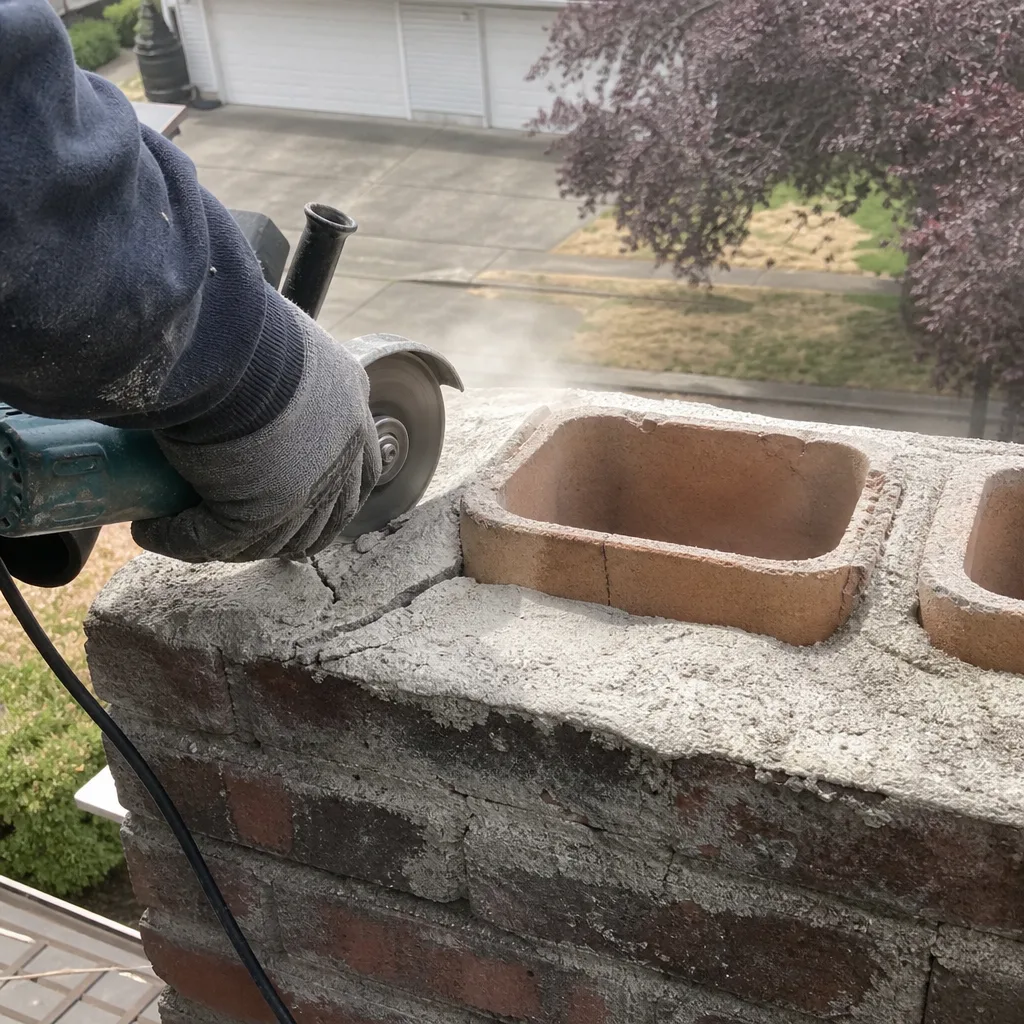
A professional chimney sweep with NFPA 211 Level 2 camera inspection in Tacoma typically costs $285 to $350 for a standard masonry chimney, and $325 to $400 for a factory-built or multi-flue system. This includes the documented photo record required under Haven Standard Clause 4. Repairs, if needed, are quoted separately in writing before any additional work begins. Call (253) 447-5982 for an exact quote - estimates are free.
The National Fire Protection Association recommends annual inspection for all chimney systems, and cleaning when creosote accumulation exceeds one-eighth inch. For Tacoma homeowners burning seasoned hardwood 2 to 4 times weekly, this typically means annual sweeping. Heavy use, unseasoned wood, or softwood burning may require more frequent service. Gas fireplace systems need annual inspection of the venting system, though creosote is not a factor.
You need a new flue liner if the existing liner is cracked, deteriorated, or improperly sized for the appliance being vented. We don’t recommend liner replacement without camera documentation you can see for yourself. In our Tacoma inspections, we frequently find clay tile liners with corner cracks or missing mortar between sections that venting exhaust can penetrate. A stainless steel liner from DuraFlex, properly sized and installed, restores code compliance and is backed by our 365-Day Done Right Promise. If a competitor has recommended liner replacement, bring us their written estimate for a Free Second Opinion.
Skipped maintenance leads to progressive, predictable damage. Creosote accumulates and becomes more difficult to remove. Moisture enters through deteriorated crowns or caps and accelerates mortar decay. Freeze-thaw cycles widen cracks. The eventual outcomes are chimney fire (from ignited creosote), carbon monoxide intrusion (from cracked liners), or structural failure requiring rebuild. In Tacoma’s wet climate, the timeline compresses. What takes 10 years to develop in a dry climate may appear in 5 to 7 years here. The cost of deferred maintenance is typically 3 to 5 times the cost of annual prevention.
We don’t recommend it. Professional chimney sweeping requires proper brushes, rods, and vacuum equipment sized to your flue. More importantly, it requires camera inspection to verify that the flue is actually clean and undamaged - something impossible from below with household tools. The upper third of the flue, where most creosote accumulates, is inaccessible without proper equipment. And roof work on wet Tacoma surfaces carries genuine fall risk. For safety, hire a certified sweep and require the camera documentation.
August combines three conditions rare at other times: dry flue interiors that allow accurate camera inspection, dry weather that permits crown and masonry repairs to cure, and technician availability before the October demand surge. Tacoma’s maritime climate means rain returns reliably in late September; national “spring cleaning” advice ignores this pattern entirely. We’ve tracked our schedule data since 2009, and August-September appointments have the highest completion rate, fewest weather delays, and lowest emergency follow-up rate of any service window.
The Bottom Line
Tacoma’s chimney maintenance calendar runs opposite to national guidance; for more guides & resources, explore our blog. The critical work happens in August and September, before eight months of rain begin. Spring inspections are diagnostic, not preventive. The wet season damages unprepared chimneys at documented, measurable rates. Real estate transactions in April through June need March inspections to allow repair time. And there is one safe winter task homeowners can perform - monthly firebox checks with photo documentation - that informs professional service without replacing it.
We’ve completed more than 38,000 chimney inspections and cleanings since 2009, every one with a written price before work started and a documented record when finished. The Haven Standard governs how we operate: written price, verified crew, documented work, and a 365-Day Done Right Promise on every job. In Tacoma’s specific climate, that standard matters more than in drier markets where national advice actually fits.
Call (253) 447-5982 for a free estimate. We’ll name the price, show you what we found, and let you decide what to do next.
Written by Corrine Halstead, Owner at Level Two Chimney Tacoma, serving Tacoma since 2009.